AI Centre of Excellence TANUH Established at IISc for Healthcare
2 minute read

• Updated on 12 Dec, 2025, 3:37 PM, by Ishita Tanwar
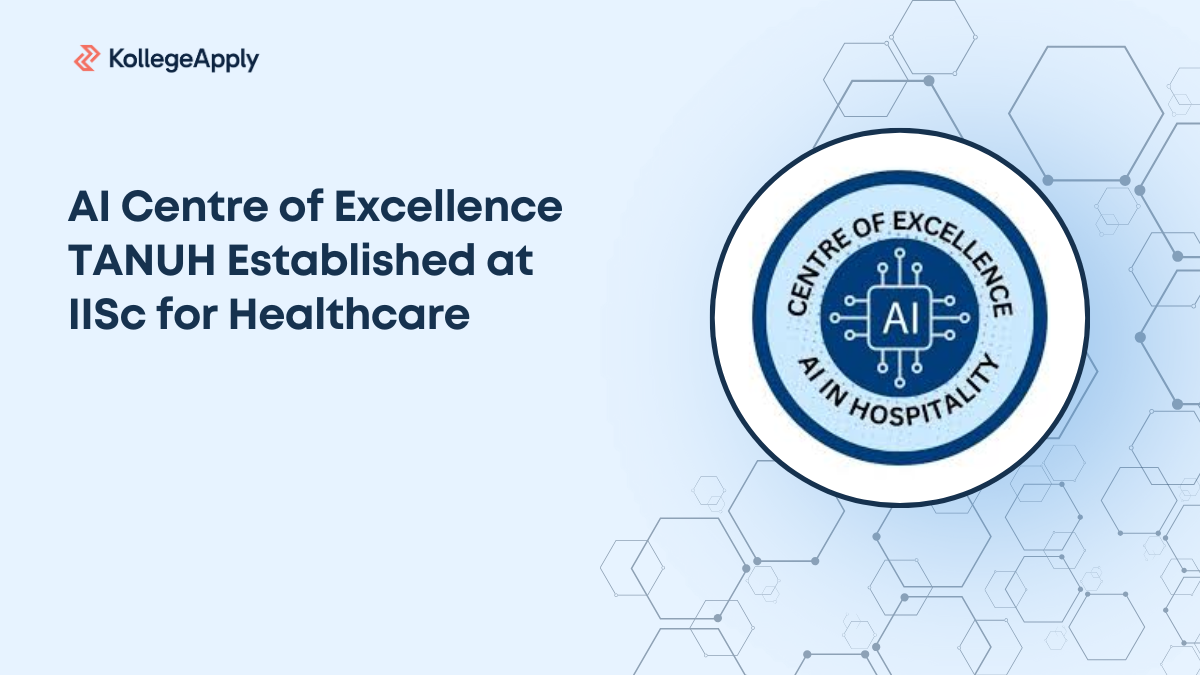
The Ministry of Education has set up a new AI Centre of Excellence for Healthcare, named Translational AI for Networked Universal Healthcare (TANUH), at the Indian Institute of Science. This initiative is part of the national mission to accelerate AI-based research and expand healthcare innovation across India. The centre is one of the 4 AI-CoEs established by the Ministry to support the vision of “Make AI in India and Make AI Work for India.” TANUH aims to bridge the gap between advanced AI research and healthcare delivery by building tools that can operate at population scale. The centre will work closely with clinicians, public health researchers, and AI scientists to create solutions that support both primary and hospital-level care.
TANUH AI Centre: Key Objectives and Research Priorities
TANUH has been registered as a Section 8 not-for-profit organisation to ensure sustainable development of healthcare technologies. The centre focuses on low-cost, scalable tools for the early detection and management of non-communicable diseases (NCDs), which remain India’s highest-burden health concern. Below is a short introduction before the bullet list. The research roadmap of TANUH prioritises multi-disciplinary collaboration, evidence-based testing and responsible deployment of AI solutions. The centre will target a wide set of diseases and clinical challenges. The major functional goals include:
- Developing AI systems for early screening and risk prediction
- Creating monitoring tools for long-term disease management
- Supporting personalised healthcare interventions
- Enhancing diagnostic capacity in primary-care settings
- Ensuring human supervision and responsible AI integration
Healthcare Areas Targeted by TANUH’s AI Solutions
Before the list below, here is an intro paragraph. TANUH’s research agenda includes multiple high-burden diseases that require rapid, accurate diagnostic support. The tools are being co-developed and validated with leading clinical partners to ensure real-world usability. The priority disease categories being targeted are:
- Oral cancer
- Breast cancer
- Retinal disorders
- Diabetes
- Mental health conditions
Interdisciplinary Team and Institutional Collaboration at IISc
The centre brings together 9 IISc faculty members from digital health, machine learning and public health. Alongside them, executives, engineers, and research staff contribute industry expertise to help scale healthcare-AI tools beyond laboratories. These solutions are being tested in partnership with institutions such as AIIMS, New Delhi. The Director of IISc, Prof G Rangarajan, stated that TANUH will support accessible and equitable healthcare, highlighting its role in advancing scalable AI systems. He noted the success of early innovations like the Aarogya Aarohan app, which reflects the mission of building impactful health technologies.
Entrance Exam News
NEET PG 2026 Answer Key: Supreme Court Hearing on October 15, Check Key Details

AP ECET Pharmacy Counselling 2026: Phase 1 Allotment Released, Report by October 15
Karnataka NEET UG Stray Vacancy Round 2026: Registration Begins for MBBS Seats

Tripura NEET PG Counselling 2026: Candidate List Released, Check PDF, Eligibility and Registration

Karnataka AYUSH UG 2026: Mock Allotment Result Out; Edit Options by October 14
MHT CET 2027 Exam: Centre Allotment May Be Linked to Class 12 College PIN Code

Assam NEET PG 2026: Check Additional Weightage Application Deadline, Eligibility and Documents

XAT 2027 Form Correction Window: Check Editable Details, Registration Deadline Here

MP NEET PG Counselling 2026 Registration Underway: Check Schedule, Last Date and Documents Required

MET 2027 Registration Last Date Revised: Check New Schedule Here