Delhi HC Says Medical Student Migration Ban Invalid, Directs NMC on Policy
2 minute read

• Updated on 5 Feb, 2026, 6:05 PM, by Arman Kumar
The Delhi High Court has struck down the blanket ban on medical student migration from one college to another, directing the NMC to create a proper transfer policy within three weeks. The ruling came in favour of a visually impaired student challenging Regulation 18 of the Graduate Medical Education Regulations, 2023 as arbitrary

The Delhi High Court has ruled that a total prohibition on the migration of medical students between colleges is unconstitutional and arbitrary, and has asked the National Medical Commission (NMC) to formulate a clear and reasonable policy for transfers.
Court Verdict on Regulation 18 and Student Transfers
A Division Bench of the Delhi High Court found that Regulation 18 of the Graduate Medical Education Regulations, 2023, which imposed a blanket ban on medical student transfers, fails the test of reasonableness and equality under Article 14 of the Constitution. The court’s ruling came in response to a petition filed by a 40 per cent visually impaired medical student who sought to migrate from Government Medical College, Barmer to a medical college in New Delhi due to health concerns aggravated by the harsh climate. The NMC had rejected his migration request on the basis that Regulation 18 removed any provision for transfer or migration
HC Directs NMC to Devise Migration Policy
The High Court held that denying migration in all cases — even for genuine or compelling reasons — is manifestly unreasonable and arbitrary, and cannot be justified merely because migration might be prone to misuse. The court noted that reasonable accommodation, especially for students with disabilities under the Rights of Persons with Disabilities Act (PwD Act), must be provided to uphold fundamental rights The bench has directed the NMC to formulate a proper migration policy within three weeks, ensuring that medical students with legitimate needs can seek transfers under appropriate conditions.
Background: Regulation 18 of GMER
Under the now‑challenged Regulation 18, the NMC had completely barred inter‑college migration of undergraduate medical students. This restriction came amid concerns that unrestricted migration could be misused and disrupt uniformity in medical education. However, the High Court found that a blanket ban denying all requests cannot stand constitutional scrutiny and must be replaced with a balanced policy.
Implications for Medical Students
The court’s decision may have wide‑ranging effects on medical education in India, particularly for students facing genuine hardships due to health, family, or personal circumstances. With the ban declared ultra vires and NMC tasked to draft a new policy, eligible medical students could soon be able to request transfers between institutions subject to clear conditions This marks a notable shift in medical education regulations, emphasising fairness, reasonableness, and protection of students’ rights while maintaining academic integrity.
General News
Jammu Kashmir Government Jobs 2026: Over 40,000 Vacancies, Check Details Here
Times Higher Education Rankings 2027: Release Date, India, Methodology

NCAHP New Registration Rules 2026: Allied Healthcare Professionals Register, Check New Guidelines
QS MBA Rankings 2027: Top 3 IIMs Slip but Stay in Global Top 100, Check Details Here

NIRF Rankings 2026 Release Date: When Will NIRF Ranking 2026 Be Released? Check Latest Update
West Bengal NIRF Ranking 2026: 100 Colleges Shortlisted, 46 in First-Priority Group, Details Here

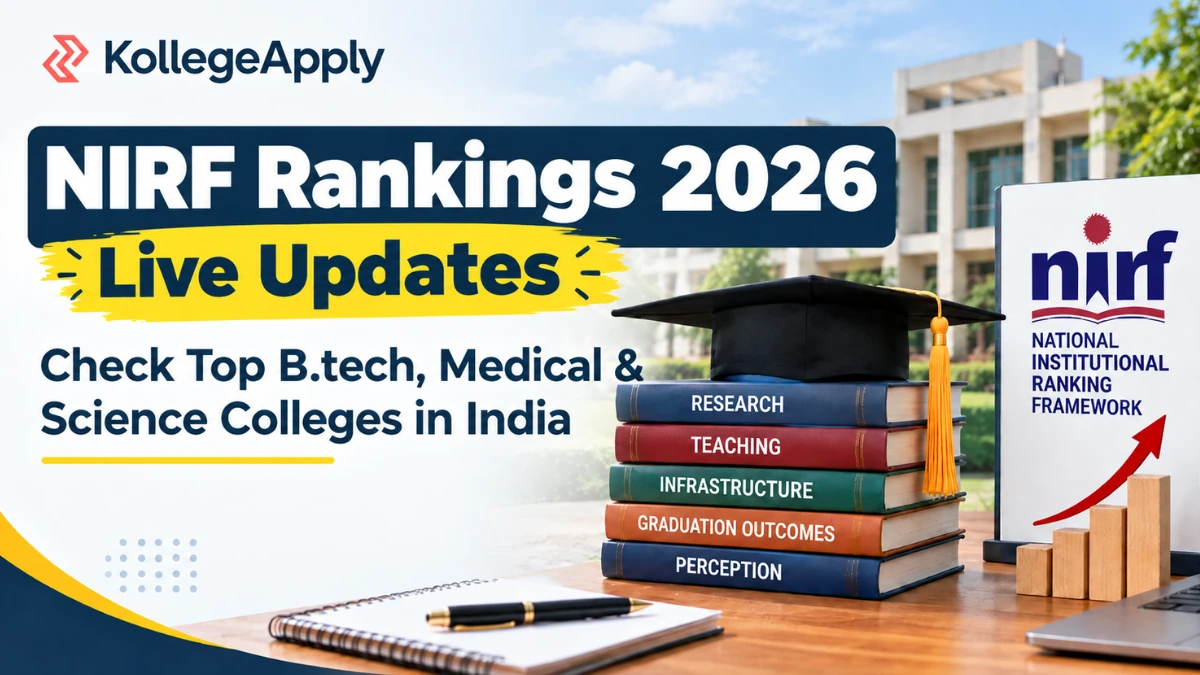
NIRF Ranking 2026: Ranking List Live , Check Top BTech, Medical Colleges, Date and Categories Here
ABVP Proposes Two-Stage Competitive Exams, NEET Twice a Year to Nandan Nilekani Task Force

IIT Kanpur Python Certificate Programme 2026: Fees, Dates
IIT Ropar MTech Defence Technology Programme: MoA with Army Air Defence College for Army Officers