Law Entrance Exams in India Raise Disability Rights Concerns Debate
2 minute read

• Updated on 16 Jan, 2026, 5:06 PM, by Ishita Tanwar
Disability rights advocates have raised concerns about accessibility and inclusion in India’s law entrance examinations. The debate highlights gaps in exam design, accommodations and policy implementation.

India’s law entrance examination system has come under renewed scrutiny over concerns related to disability rights and accessibility. Legal scholars and disability rights advocates have pointed out systemic gaps that may limit equal participation of candidates with disabilities in competitive law admissions. The discussion has gained attention amid ongoing reforms in higher education entrance testing and growing emphasis on inclusive assessment practices.
Accessibility Challenges in Law Entrance Exams
Law entrance exams are designed as high-stakes, time-bound assessments. However, experts argue that the current structure often fails to adequately address the needs of candidates with disabilities. Key challenges highlighted include:
- Limited access to assistive technologies
- Inconsistent implementation of extra time provisions
- Lack of clarity on permissible accommodations
- Uniform exam formats that do not account for diverse disabilities
These issues may disproportionately affect candidates with visual, locomotor, or learning disabilities.
Legal Framework and Disability Rights
India’s disability rights framework mandates reasonable accommodation and equal access to education. While policies exist on paper, implementation during entrance examinations remains uneven. Legal experts note that entrance tests must align with:
- National disability rights legislation
- Principles of substantive equality
- International best practices on inclusive testing
Failure to do so can undermine the intent of inclusive education policies.
Impact on Law Admissions and Representation
Law entrance exams serve as gateways to premier legal institutions. Barriers at this stage can affect long-term representation of persons with disabilities in the legal profession. Advocates argue that exclusion at the admission level reinforces systemic inequality and limits diversity within courts, academia and legal practice.
Calls for Reform and Standardised Guidelines
Stakeholders have called for clear, uniform guidelines on accommodations across all law entrance examinations. Suggested measures include disability-sensitive question design, transparent accommodation policies and trained evaluation personnel. There is also a push for consultation with disability rights groups while framing examination rules.
Way Forward for Inclusive Legal Education
Ensuring accessibility in law entrance exams is viewed as a critical step toward inclusive legal education. Experts emphasise that fairness in assessment does not compromise merit but strengthens it by providing equal opportunity.
General News
DU FSS 2026-27: Last Date Extended to October 23

IIT Kharagpur Free GATE JAM Preparation Platform

IIM Ahmedabad Launches 2-Year Executive MBA at Dubai Campus for Working Professionals

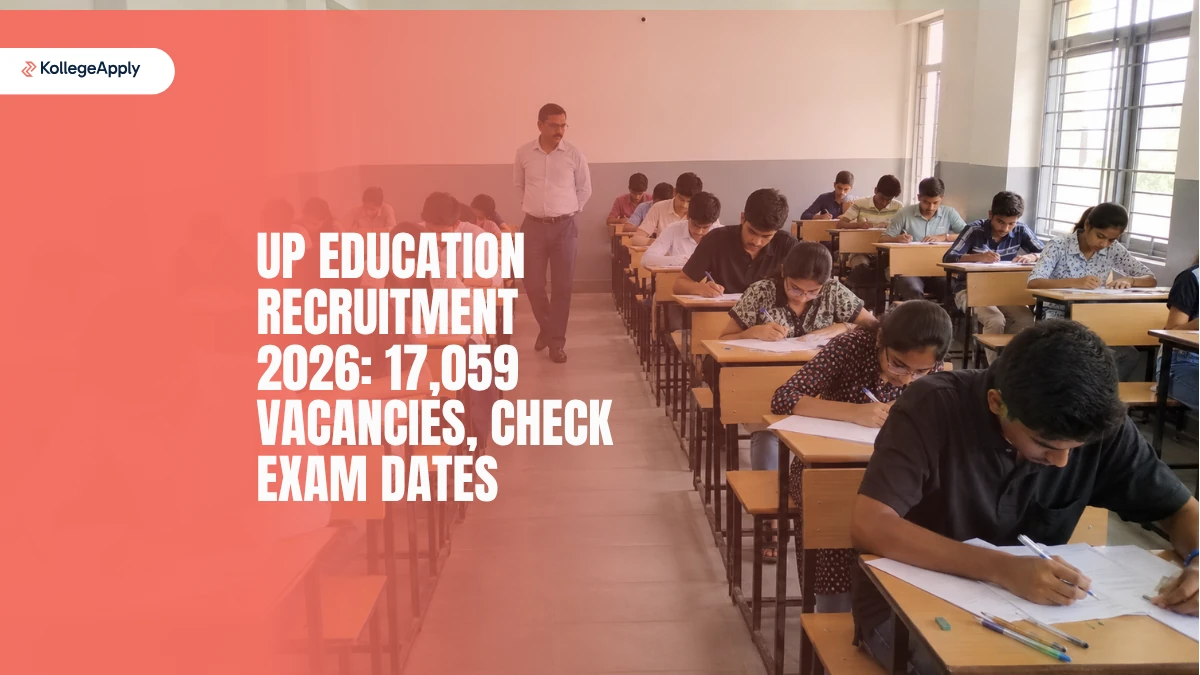
UP Education Recruitment 2026: 17,059 Posts and Exam Dates Here
UP Scholarship 2026-27: Applications Open for UG, PG and Diploma Students, Apply Here

GLIM Chennai PGPM 2027-28 Fee Structure: Check Total Fees

IIT Roorkee University of Calgary Joint Doctoral Degree Programme

JEE Advanced 2026: Top 100 Choices, IIT Bombay Leads

UP Scholarship 2026-27: Check Last Date and Apply Online

NIRF Ranking 2026: NIT vs IIT 5-Year Engineering Trend